Introduction
The Holland surname is very common in Ireland. Irish researchers tell us that in many cases the surname derives from an anglicised version of an Irish Gaelic surname. This Liverpool-Irish Holland family is quite mysterious because of its unknown origins. They were from Ireland but that's probably as much as we will ever know about their origins because for some reason they left Ireland without getting married. Some of the descendants of this family had complicated relationships so some researchers may be in the process of discovering their Holland background after growing up knowing little about them. My line is via Thomas Holland (1901-1952) via a son born before his second marriage. A case of a step-son turning out to be a son despite being registered and baptised under a different father's name. An odd part of this whitewashing was the curious decision to have the real father named as a godfather at the baptism. Anyhow let's look at these Hollands, their children and grandchildren and the Liverpool-Irish families linked to them by marriage, the Bradys and the Reids.
William & Jane Holland
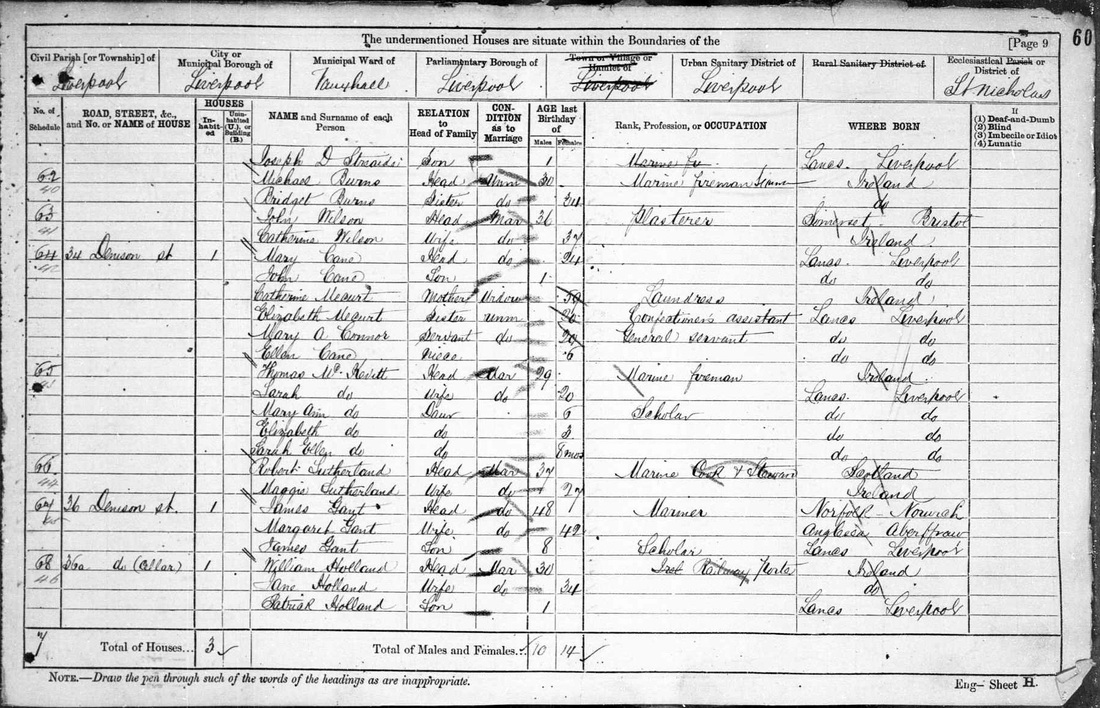
My Great, Great Grandparents William John Holland and Jane Grogan moved from Ireland to Liverpool in 1879. Their son, Patrick Joseph Holland, was born on 17th December 1879 at 36 Denison Street Liverpool. It's not yet known where in Ireland they came from some of the family think they came from County Cork while others think they came from Belfast. No marriage record can be found for them so it's possible they left Ireland because they were unmarried and had a child on the way. One family story says that Jane was ill during the crossing from Ireland and this is why they decided to stay in Liverpool. William got a job as a railway porter he was a cotton loader or goods labourer for the railways in Liverpool. Patrick was baptised at St. Mary's RC church in Edmund Street on 17th December. His baptism record says he was born on 16th December. Jane's maiden name was Grogan. Patrick's birth and baptism records have his mother's surname wrong. Later birth and baptism records show her as Jane Grogan.
Denison Street
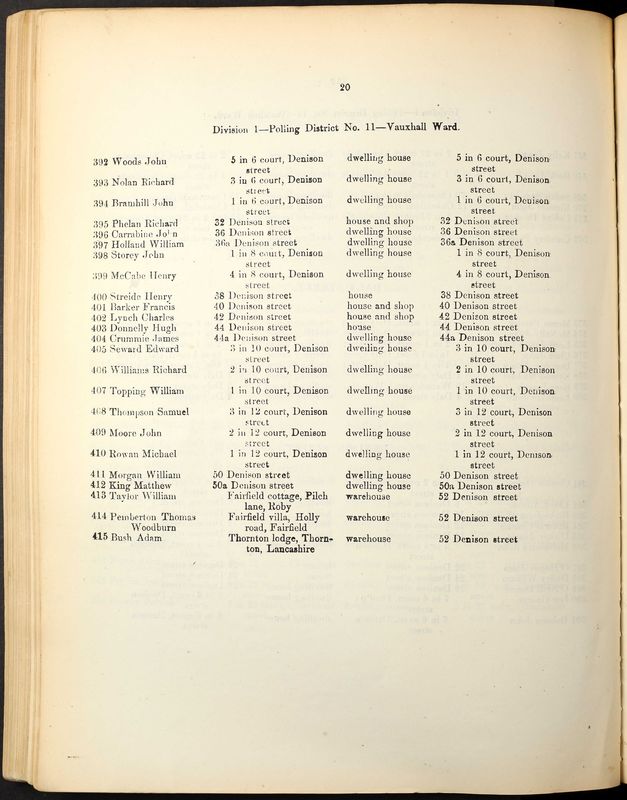
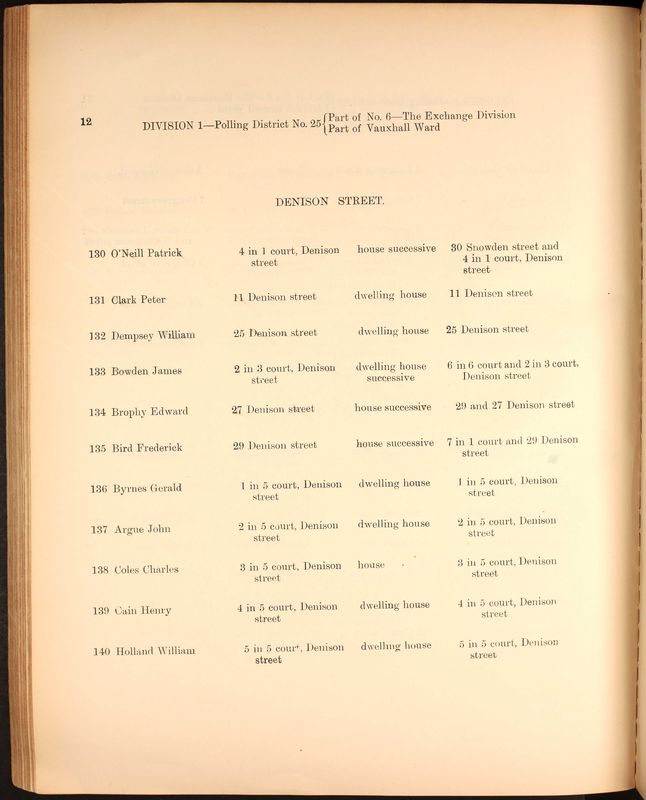
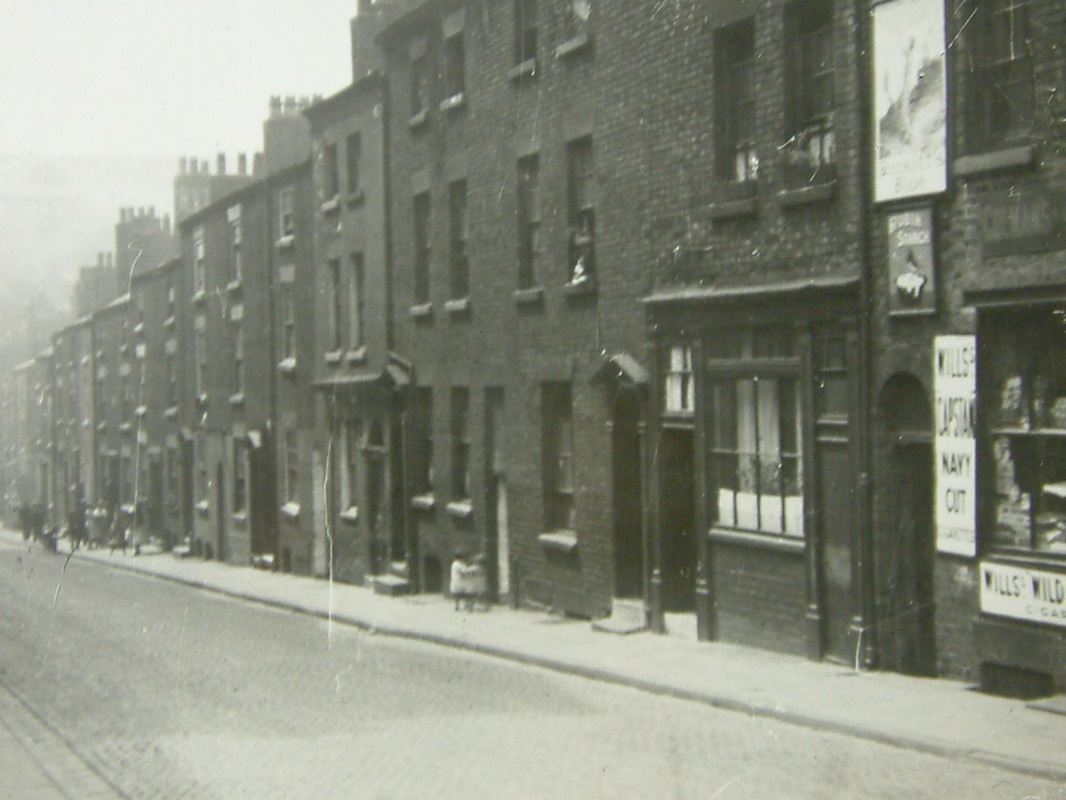
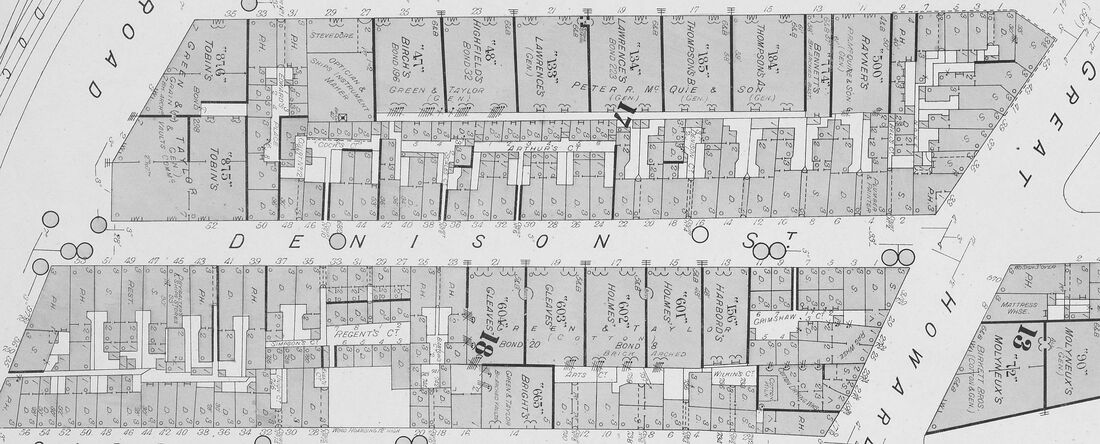
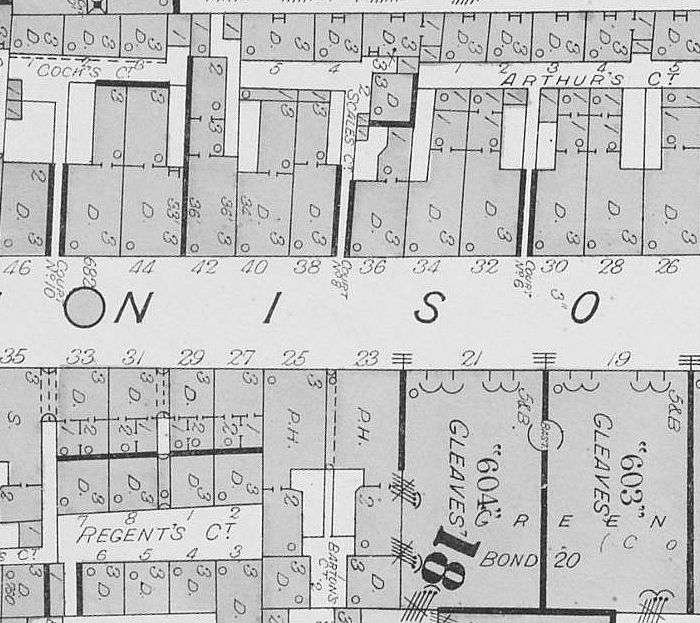
The Holland family lived in Denison Street for over 20 years. Denison Street had a lot of lodging houses for travellers and seamen it had a reputation for being one of the more lively streets. The street is most famous for having been where Kitty Wilkinson operated a wash-room during the Cholera epidemic of 1832. Kitty Wilkinson née Seaward came to Liverpool with her family as a child from Derry, County Londonderry, Ireland in the 1790s. She had a difficult early life but overcame adversity and gained recognition for her many years of public service. Kitty is credited as the pioneer of public wash-houses and she is permanently commemorated in a stained glass window in Liverpool's Anglican Cathedral. The Hollands first lived in the cellar of 36 Denison Street opposite the "Old Pilot Boat" public house. Around 1896-97 they moved across the street and lived in House 2 in Court 3 (Barton's Court). William Holland also lived again at 36a Denison Street around 1902-03 and in House 5 in Court 5 (Regent's Court) Denison Street around 1904-05.
Son Patrick Joseph Holland was baptised at St. Mary's RC church on 17th December 1879
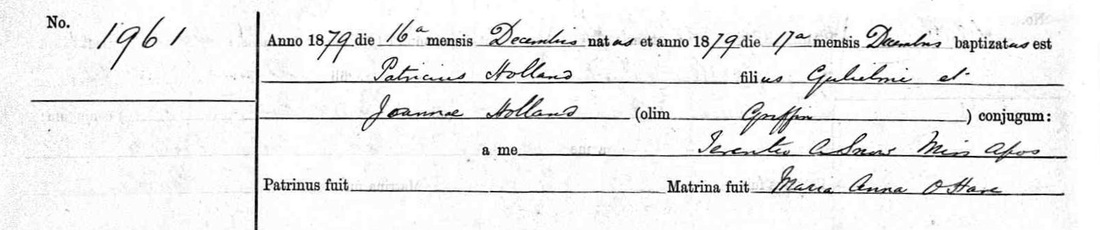
Jane Holland registered the birth of her son Patrick Joseph Holland on 19th January 1880

William Holland on the Electoral Register 1879-80
William & Jane Holland with their son Patrick at 36 Denison Street on the 1881 Census
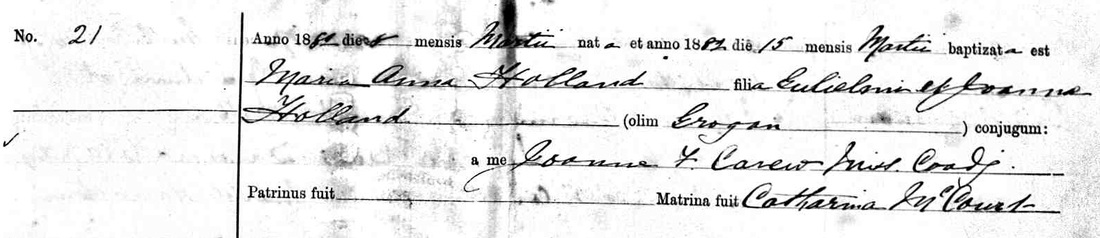
Daughter Mary Ann Holland was baptised at St. Mary's RC church on 15th March 1882
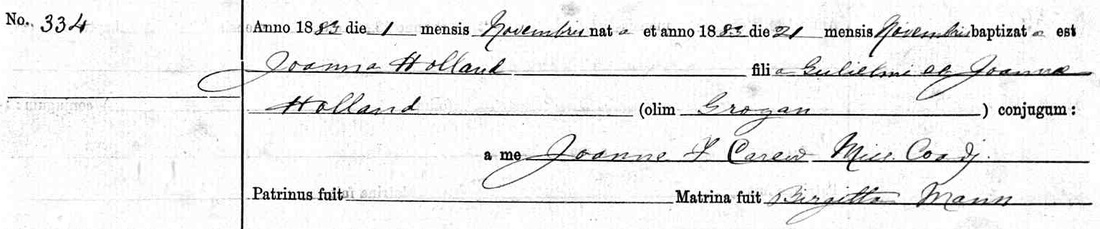
Daughter Jane Holland was baptised at St. Mary's RC church on 21st November 1883
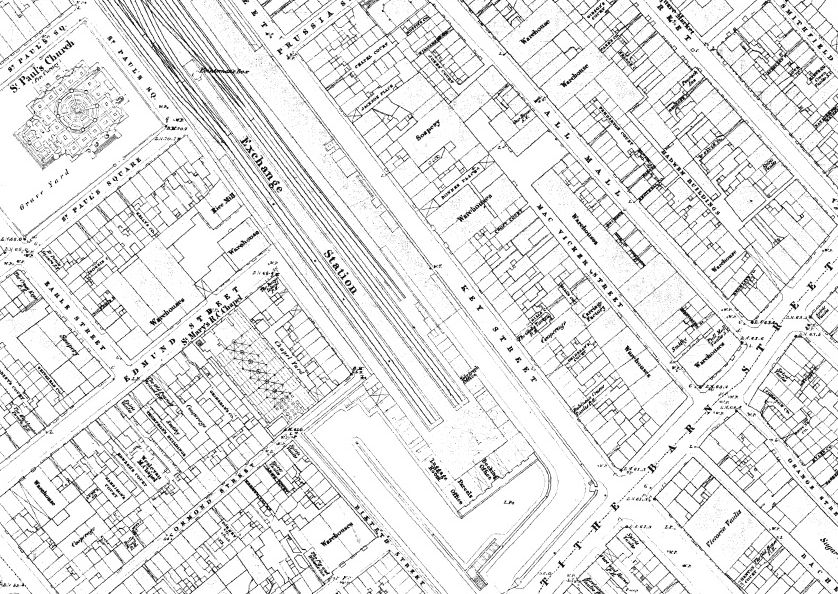
St. Mary's RC church was located on Edmund Street before the expansion of Exchange Station
St. Mary's moved to Highfield Street in 1885
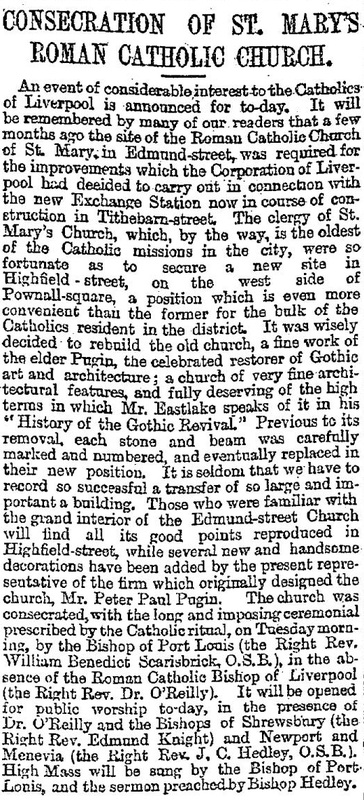
Liverpool Mercury 9th July 1885
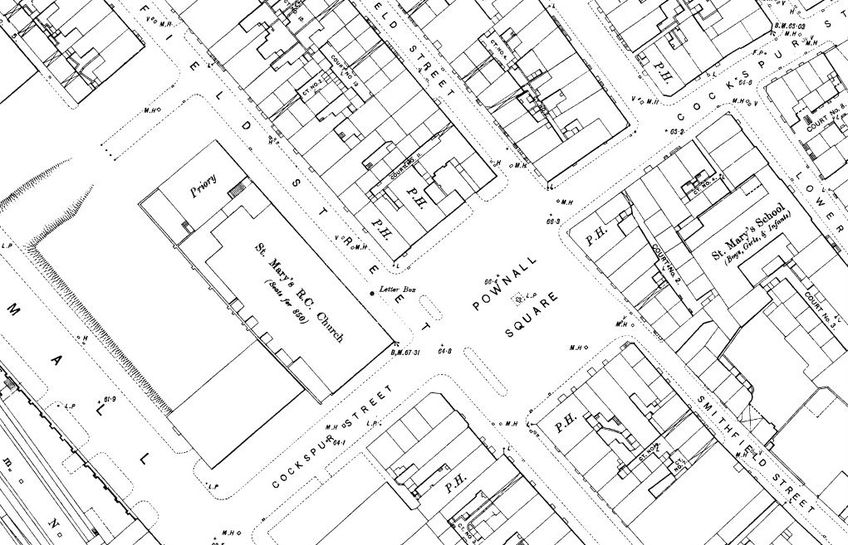
The rebuilt St. Mary's RC church in Highfield Street and its school located nearby on Lower Milk Street
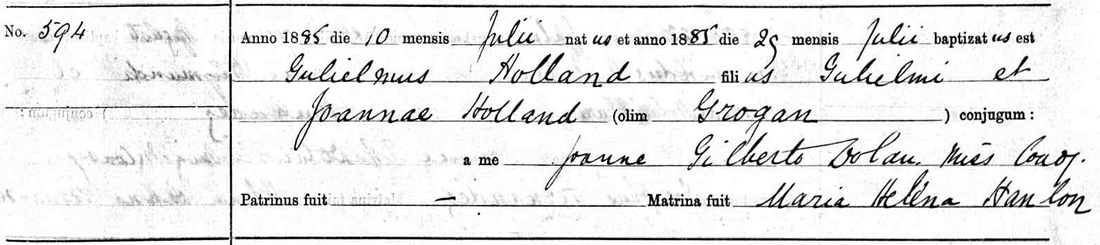
Son William Holland was baptised at St. Mary's RC church on 29th July 1885
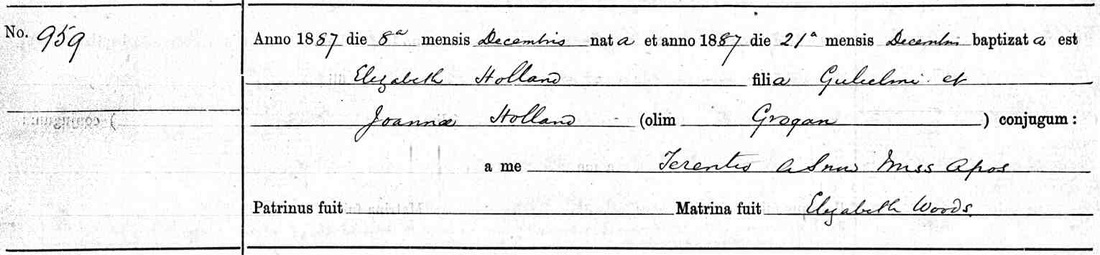
Daughter Elizabeth Holland was baptised at St. Mary's RC church on 21st December 1887
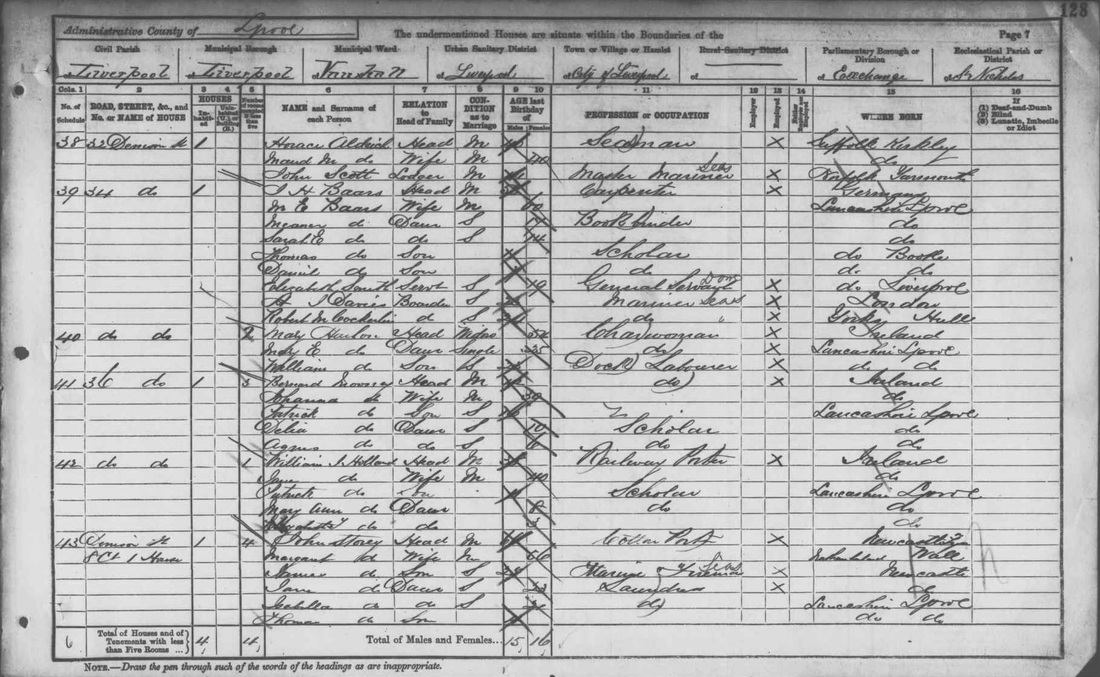
William & Jane with their children Patrick, Mary Ann & Elizabeth at 36 Denison Street on the 1891 Census
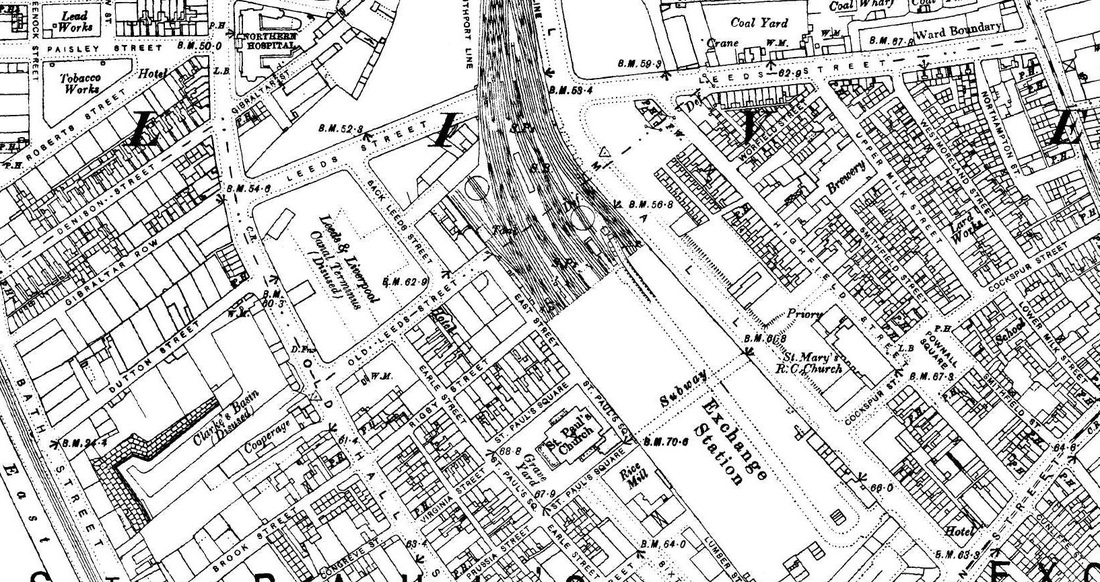
Map showing Denison Street and St. Mary's RC church in Highfield Street
The Hollands at House 2 in Court 3 Denison Street in 1896-97
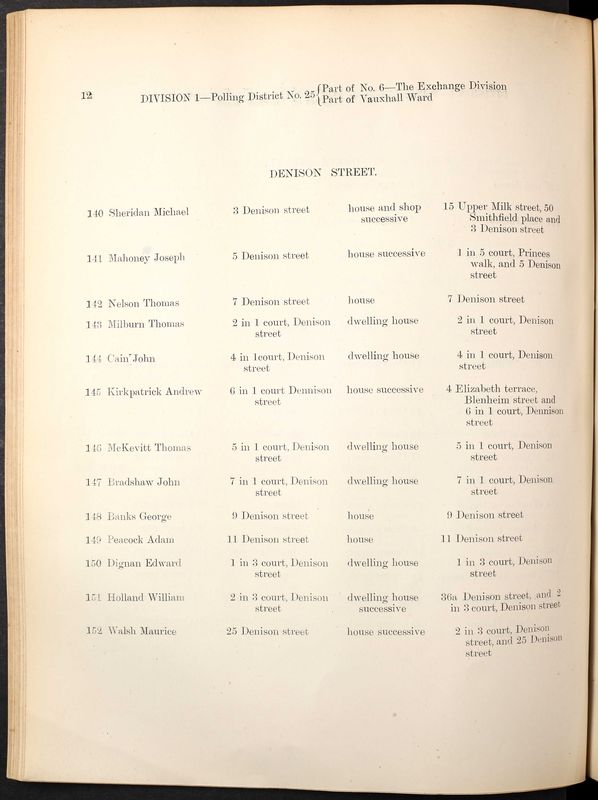
Auction of property including House 2 in Court 3 in Denison Street
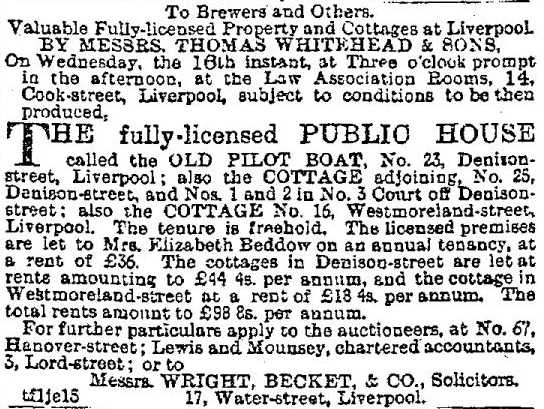
Liverpool Mercury 1st June 1897
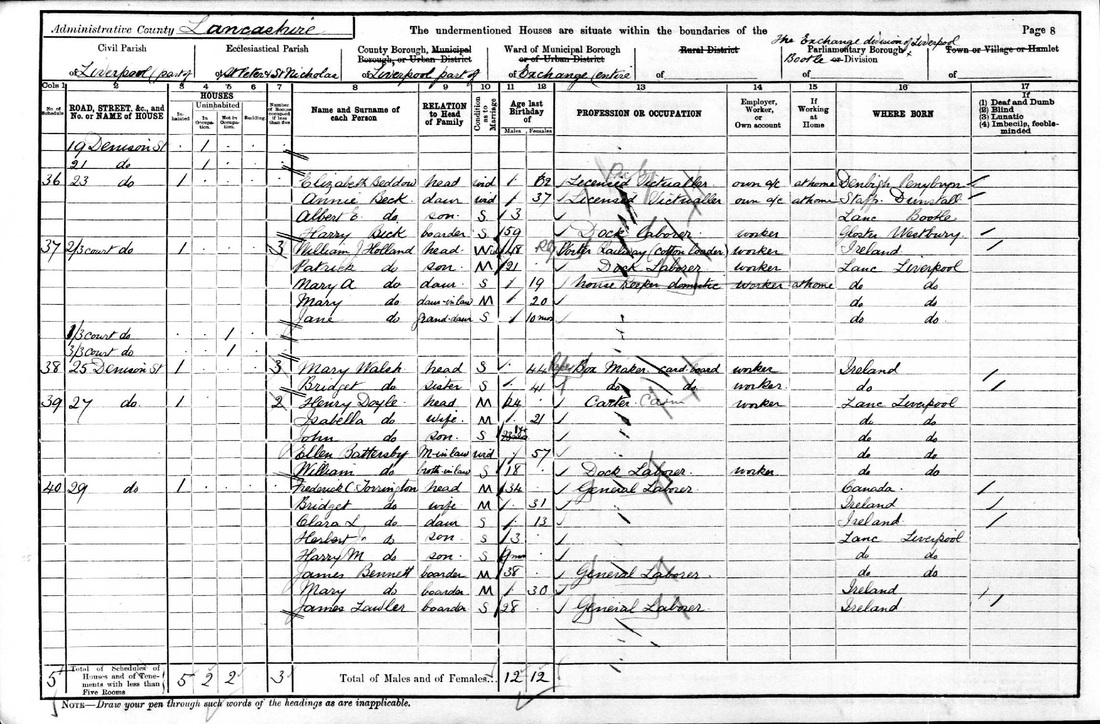
William, children, Mary & grand-daughter at House 2 in Court 3 in Denison Street on the 1901 Census
William Holland at 36a Denison Street in 1902-03
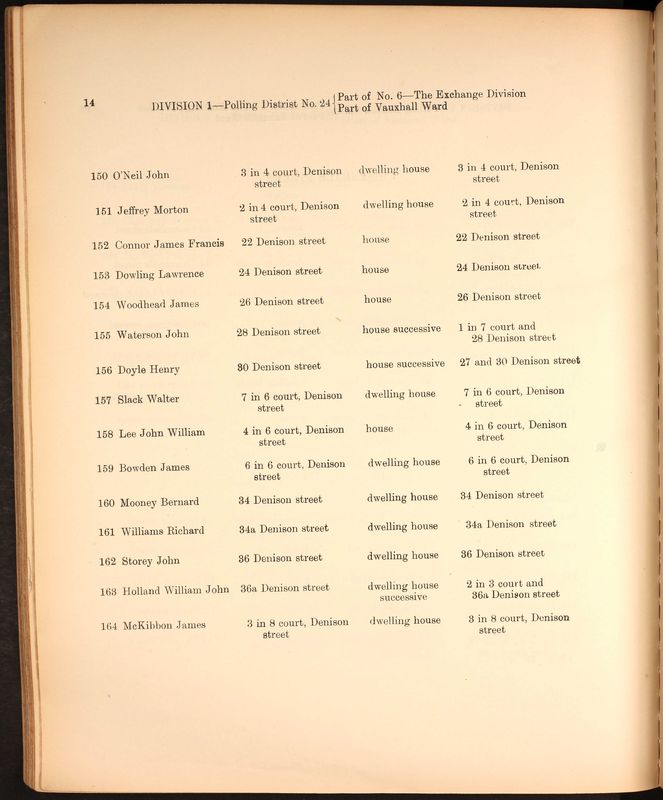
William Holland at House 5 in Court 5 Denison Street in 1904-05
Denison Street c1930s
Map showing Denison Street in 1888
Number 36, Court 3 (Barton's) & Court 5 (Regent's) in Denison Street 1888
All census information for England on this website is Crown Copyright from National Archives
